Five Stories Shaping the Future of Healthcare

Founded in 1895 as Phoenix’s first hospital, St. Joseph’s Hospital and Medical Center has long been central to the region’s healthcare story. For more than two decades, Kitchell has advanced facilities and introduced innovations that set new benchmarks in patient care. Since 2002, Kitchell has delivered more than 152 projects totaling over 1 million square feet, all shaped in close collaboration with hospital leadership.

Through advanced planning and innovative approaches, Kitchell has helped CommonSpirit Health (formerly Dignity Health) maximize resources while elevating care environments.

Building for Breakthroughs

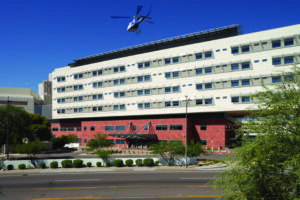
The Barrow Neurological Institute (BNI) Neuroscience Tower (NST) represented one of the most ambitious expansions in the hospital’s history. At 438,000 SF, the tower added critical space for acute care, imaging, oncology, teaching, and research. Kitchell’s preconstruction and delivery teams partnered with designers and hospital leadership to ensure the tower met the institute’s needs without exceeding budget. By generating 150 cost-saving solutions, the company enabled the addition of a shelled seventh floor at no added cost.

“Through Kitchell’s value engineering process, we walked away with a much stronger sense of the quality and performance elements of their work and a sense of comfort knowing they had made informed decisions.”
— Mark Bittner, Former Area Group Director of Design and Construction, Dignity Health (Now CommonSpirit Health)

A decade later, Kitchell came full circle — transforming the shelled seventh floor into a healing space. The 2006 completion of the Neuroscience Tower is pictured at left; a patient room from the 2018 build-out is shown at right.
   

Beyond its size, the tower became a platform for groundbreaking advancements in care — most notably the installation of the world’s first ZAP-X® Gyroscopic Radiosurgery™ platform. Using computer-controlled robotics, ZAP-X delivers precise radiation while minimizing exposure to healthy tissue. The non-invasive outpatient procedure requires no anesthesia or incisions, allowing patients to return to normal activities almost immediately. This installation positioned BNI as the world’s only center to offer the technology, expanding access to advanced care.

Expanding the Reach of Care

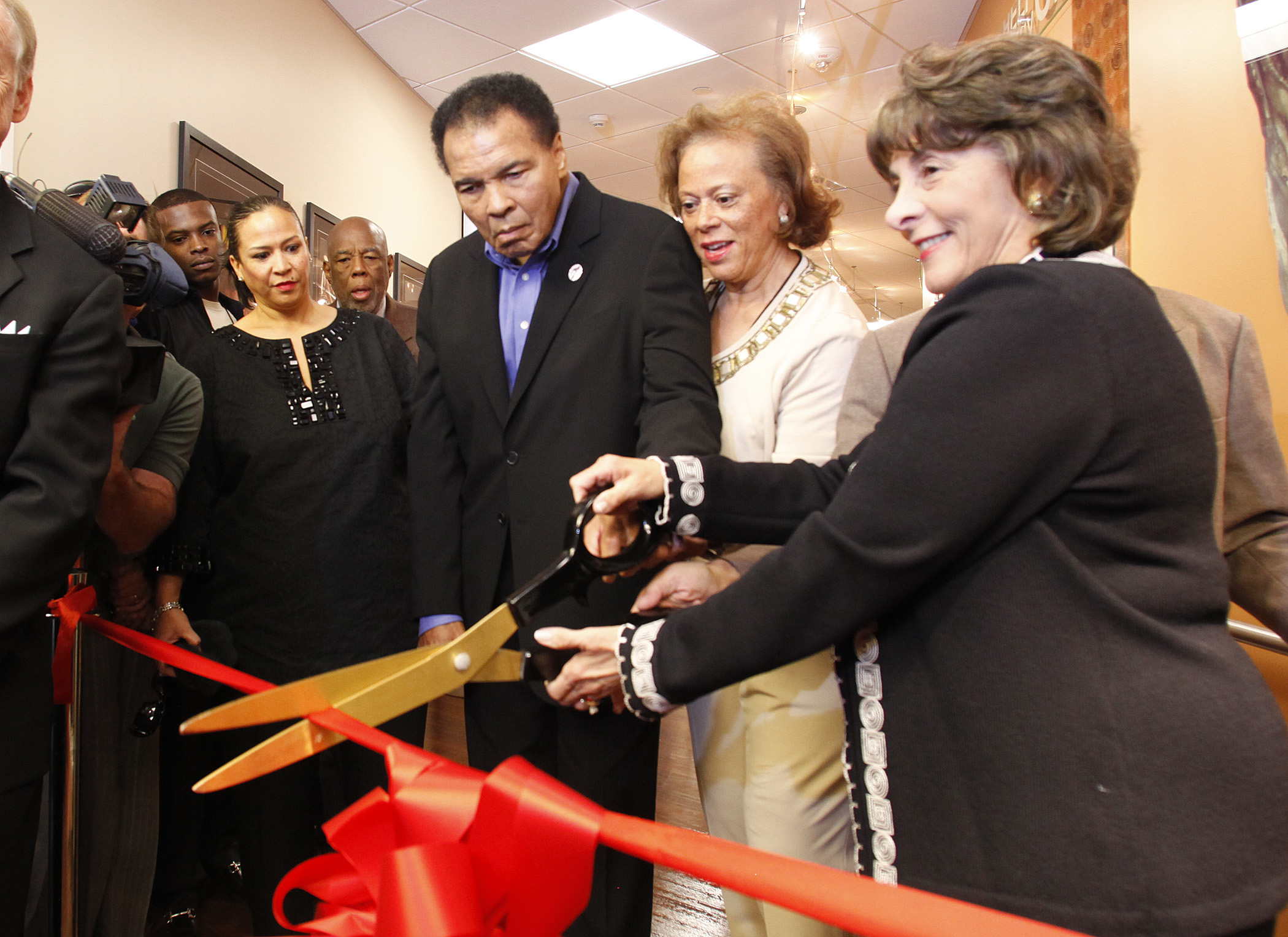
Kitchell delivered the Muhammad Ali Parkinson Center at Barrow Neurological Institute, the nation’s most comprehensive Parkinson’s disease facility. The expansion doubled patient capacity — adding 10 exam rooms, specialized spaces for tremor and balance testing, therapy and multipurpose rooms, advanced labs, and a rehabilitation gym. This build-out transformed the original center into a destination capable of treating 1,600 new patients annually, uniting clinical, research, rehabilitation, and educational services under one roof. The milestone was marked by Muhammad Ali himself at the ribbon-cutting ceremony.
Rising to Meet Complex Challenges

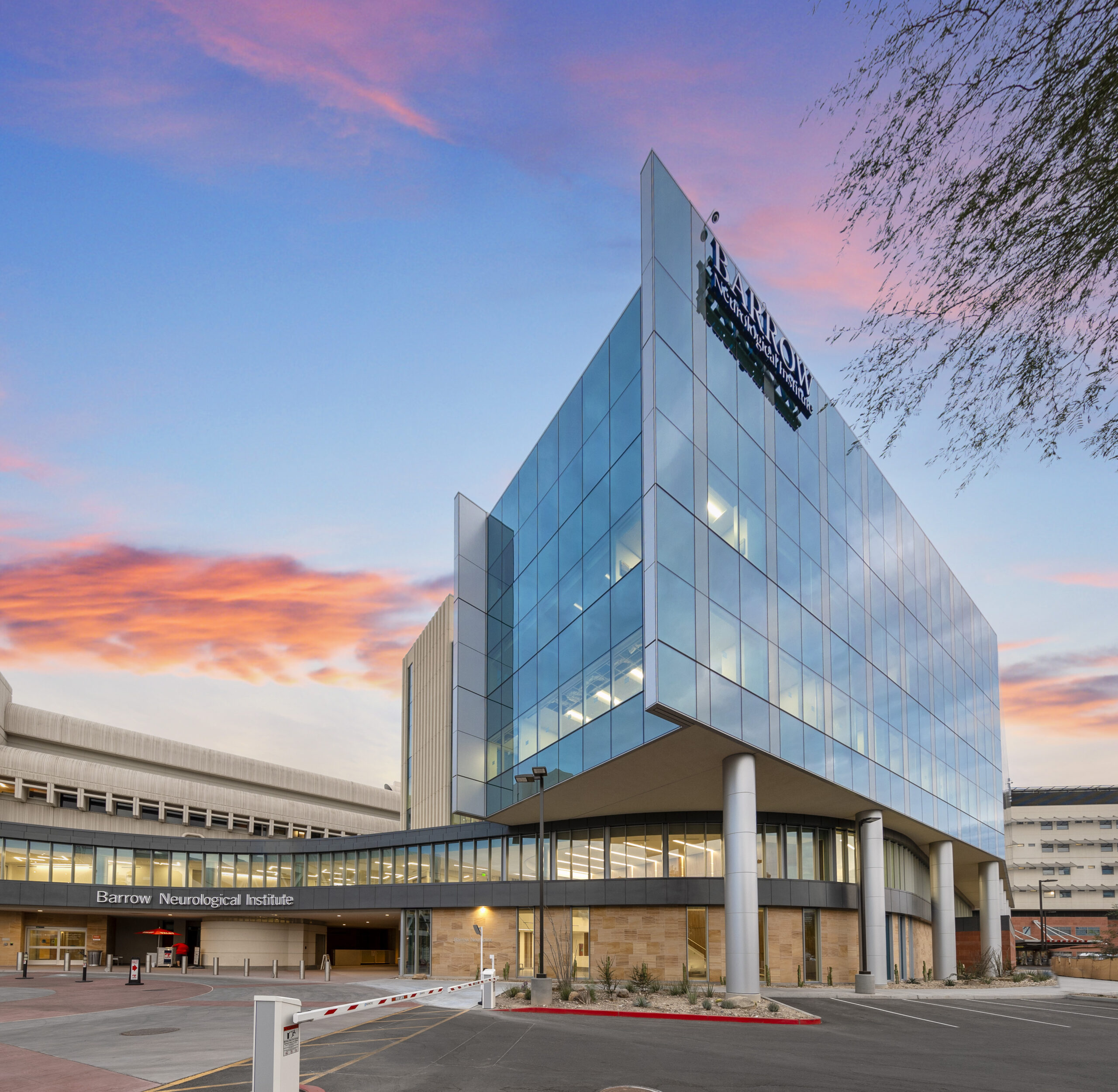
The Barrow Neuroplex stands as a milestone in Phoenix healthcare — a 130,050 SF, five-story medical office building delivered through a design-build partnership between Devenney Group Architects and Kitchell. Constructed during the height of a global pandemic on an active hospital campus, the project was delivered on time with seamless coordination.

More than just a building, the Neuroplex brought together critical specialties — including ENT/skull base surgery, neuro-oncology, stroke, and neuroendocrinology — while also introducing an ambulatory surgery center, infusion bays, and expanded research labs. Its hybrid identity, functioning both as an extension of the hospital and as a standalone MOB, freed up clinical space and expanded research capacity by 50%.

Delivering such a complex project was not without obstacles: a postage-stamp site adjacent to an active ER, pandemic restrictions, and intricate tie-ins to existing hospital infrastructure. Kitchell navigated these challenges through advanced modeling, laser scanning, and precision coordination, ensuring seamless integration with the campus. Supporting this effort was a 3D model of the Barrow Neuroplex, which served as a critical tool for planning and execution.

A unitized curtain wall system of 315 panels shaved two months off the schedule while improving installation quality. Expansive glass on the upper levels captures sweeping views, and the floating glass form creates a bold reference to the Barrow name, linking the new MOB to an existing pedestrian bridge with minimal disruption to the campus.
Strengthening the Foundation for Healing

Kitchell’s expertise also extends to critical infrastructure upgrades. In 2024, the company replaced decades-old air handler units on the Ancillary Building — a highly technical project requiring precision logistics. Pictured below, a 300-ton crane was assembled in a tight space near the Neuroplex building, requiring the shutdown of two surface streets. Erected at midnight on Saturday and fully disassembled the following afternoon, the crane enabled crews to place two new units totaling nearly 80,000 pounds — all over the course of one weekend. The work was delivered with detailed planning and a safety-first approach, ensuring no disruption to hospital operations.

The Next Chapter

Looking ahead, Kitchell was recently awarded the CommonSpirit Ivy Brain Tumor Center (IBTC) 4th Floor Build-Out, a 12,000 SF laboratory project.

This project will deliver highly specialized research and laboratory areas, including tissue culture rooms and a freezer farm, advancing IBTC’s brain tumor research initiatives.

Shaping the Future of Healthcare

With more than 152 projects and 1 million SF delivered on the St. Joe’s campus, Kitchell’s partnership with CommonSpirit Health continues to shape the facilities that enable breakthroughs in research, specialty care, and patient outcomes.

Five Stories. One Vision. Forging the Future.

Forging the Future of the Built World isn’t just a vision statement — it’s a declaration of who we are and where we’re going. It speaks to the shared drive that unites Kitchell’s people across disciplines and generations — a relentless commitment to build stronger communities, embrace innovation, and shape what comes next.

Across Kitchell, this idea takes form in countless ways: in the strength of our craftsmanship, the creativity of our problem-solving, and the integrity of our relationships.

Here, five voices from across the company reflect on what Forging the Future of the Built World means to them — revealing a collective story of resilience, innovation, and purpose that continues to define Kitchell’s legacy and future.

  • Kaley Simon, Market Executive, Kitchell Contractors
    “To come out of the forge is to be made of steel — strong, hardened, and made with care.”
  • Johnathan Coates, Senior Project Manager, Kitchell CEM
    “Forging the Future means turning today’s challenges into tomorrow’s solutions. It’s about shaping culture, procedures, and practices that deliver best-in-class service to our teams, clients, and partners across the built environment.”
  • JoAnne Bourgogne, Director of Risk Management, Kitchell Corporation
    “Forging the Future means moving forward in deliberate, innovative ways to ensure our company continues to grow and evolve.”
  • Kevin Miller, Senior Vice President, Kitchell Development Company
    “Forging the Future means doing what Kitchell has always done — operating with integrity, delivering quality, and evolving with new technology to thrive for the next 75 years.
  • Cameron Glass, Director of Justice, Kitchell CEM
    “We don’t just build projects; we create spaces that uphold dignity, spark opportunity, and bring hope to communities. Forging the Future means creating environments that inspire change and serve as a foundation for a better tomorrow.”

As Kitchell celebrates 75 years, Forging the Future of the Built World reflects more than the company’s past achievements — it embodies its promise for the future. Guided by shared values and an unwavering vision, Kitchell’s people continue to build not only remarkable projects, but a lasting legacy of innovation, collaboration, and purpose.

A Visionary Partnership with the Foundation for Blind Children

The Foundation for Blind Children (FBC) was born in 1952, when a small group of parents in Phoenix, Arizona refused to accept the idea that the only option for their children with vision loss was to be sent away to an institution hours away in Tucson. Their determination created a place built on belief, possibility, and opportunity.

Five years later, in 1957, Betty Kitchell joined the FBC board. She brought an unwavering conviction that children with vision loss could thrive, and that belief became woven into both FBC’s and Kitchell’s culture. Betty’s story came full circle when she later benefited from FBC’s adult programs—proof of the lasting impact of the vision she helped shape.

Since that time, the partnership between FBC and Kitchell has spanned more than six decades. The company’s involvement has included board service, fundraising, construction management, and even designing the signage at FBC’s current campus. The connection has always extended beyond projects, creating opportunities to witness extraordinary milestones—from rafting the Grand Canyon to watching a blind student land a plane in Washington, D.C. Each moment demonstrates the power of support and the belief that barriers can be overcome.

The relationship continues to grow in new ways. A recent introduction to goalball, a fast-paced sport for athletes who are blind or visually impaired, inspired plans for a full tournament fundraiser in 2026. The event will bring together employees, subcontractors, and partners to raise awareness and strengthen support for FBC’s mission.

For more than 60 years, the partnership has remained steady through changing times and leadership, reflecting a shared commitment to FBC’s mission to provide education, tools, and services that enable independence—and its vision of a world where vision loss is a diagnosis, not a disability.

Celebrating 75 Years of Giving Back

For 75 years, Sam Kitchell’s belief in giving back has shaped more than buildings—it’s shaped our culture. That spirit lives on through Founder’s Day, our tradition of service.

In 2025, 385 employees rolled up their sleeves, giving 1,182 hours of service across 37 events nationwide—proof that Sam’s vision continues to make an impact. The legacy is strong. The future is brighter.

Watch the video above to see our employees in action, hear their personal stories, and learn more about the organizations we partnered with.

Dimple Dullabh: Measuring What Matters

Dimple Dullabh, Accounting Manager, Kitchell CEM

Twenty-two years ago, marriage brought Dimple Dullabh to the United States, but it was her drive to continue a career in accounting—her university major—that helped shape the path ahead. In 2005, she joined Kitchell as an accountant, not knowing that role would become so much more. “What started as a need to provide for myself transformed into a career, a community, and a meaningful chapter of my life,” she says.

Since joining Kitchell, Dimple’s role has grown into something larger than numbers on a ledger. She’s built lasting relationships, found a culture that feels like a second home, and discovered a place where resilience and compassion are part of the foundation.

Strength in Community
The spirit of Kitchell revealed itself most clearly during one of the hardest times in her life. After the loss of her son at birth and later pausing her career to care for her daughter’s medical needs, Dimple recalls the compassion and encouragement of her colleagues. That support opened the door for her return—initially covering a short-term maternity leave—and reignited her professional journey. “This journey back is a testament to the power of community, resilience, and the unexpected paths that shape our growth,” she reflects.

Shaping Tomorrow, Together
For Dimple, Forging the Future of the Built World means coming together to create a better, more sustainable environment by investing in people. “When we empower our teams, that positive impact extends to our clients and the communities we serve,” she says. Communication, collaboration, and accountability are values she brings to her work every day.

Looking ahead, she hopes Kitchell is always known for its care—for people first, and for the communities strengthened through that care. Her legacy, she says, is about fostering growth and continuous improvement. “Ultimately, I want my work to help drive operational excellence and create a ripple effect that benefits our clients, our teams, and the communities we serve.”

Innovation Beneath the Surface

A three-story solution that redefined arrival at Scripps Memorial La Jolla.

In the 1980s, Kitchell embarked on a transformative 12-year partnership with Scripps Memorial Hospital in La Jolla—delivering more than $75 million in construction (the equivalent of over $200 million today) that reimagined and reshaped the hospital campus. Working side-by-side with the owner and design team, Kitchell provided preconstruction, cost estimating, scheduling, and construction oversight, while constantly developing creative alternatives to meet the hospital’s evolving needs.

The signature achievement was a one-of-a-kind parking solution: three stories of underground parking built beneath a landscaped plaza and grand entry. This bold move not only solved a pressing space shortage but elevated the entire arrival experience, creating a welcoming gateway for patients and visitors.

Kitchell’s work also extended to critical new facilities, including a radiation oncology and specialty eye treatment center and an alcohol and drug rehabilitation hospital. Each demanded precise planning and flawless execution in the midst of an active healthcare environment.

A Lasting Legacy

These projects stand as a defining example of Kitchell’s ability to deliver innovative, complex solutions that enhance patient care environments while keeping hospitals fully operational. Decades later, that expertise continues to set Kitchell apart: in 2025, Modern Healthcare ranked the company as the 7th largest healthcare construction manager in the nation, with a place in the Top 20 for more than 30 years.

Healthcare isn’t just part of Kitchell’s portfolio—it’s in its DNA.

David Koval: Making the Case for Culture

David Koval, Chief Operating Officer / General Counsel, Kitchell Corporation

As both Chief Operating Officer and General Counsel, David Koval balances two vantage points: strategist and steward. For more than two decades, he has guided Kitchell with clarity and conviction, ensuring every decision drives the business forward while reflecting the values that define the company.

David first joined Kitchell as outside counsel, quickly standing out for his ability to pair legal insight with practical solutions. Recognizing his impact, Kitchell brought him in-house with Kitchell Contractors, and over time his reach expanded across the corporation. Today, he works alongside leaders of every operating company, shaping business and legal decisions that touch every corner of the organization.

A defining moment came early in his tenure during a leadership discussion about a struggling project. The outcome was guided not by convenience, but by a deliberate debate about Kitchell’s values. “It was eye-opening,” David recalls. “That was the moment I knew Kitchell wasn’t your typical corporation.”

That experience continues to shape his philosophy. He often reflects on advice that still guides him: “Your culture is defined by the worst conduct you’re willing to tolerate.” For David, leadership means leaning into transparency, facing challenges head-on, and ensuring integrity is never optional.

Looking ahead, he envisions Kitchell recognized for more than its projects: “performing high-quality work with integrity and making a difference in our communities.” His influence is clear—protecting the company’s culture, strengthening its reputation, and advancing progress that will keep Kitchell strong for the next 75 years and beyond.

Innovation at Every Angle

In 1979, Kitchell built more than a new wing at the Arizona Biltmore—it carried forward Frank Lloyd Wright’s influence on the resort. Wright’s touch is most visible in the distinctive “Biltmore Block,” patterned after a palm tree, which left a lasting imprint on the resort’s identity. The expansion carried forward Wright’s design ethos of geometric harmony, desert-inspired materials, and integration with the landscape.

A hallmark of the project was Kitchell’s value engineering, which pioneered a cost-effective method to install 45,000 precast tiles in 36 shapes—an industry first that preserved Wright’s aesthetic while controlling costs.

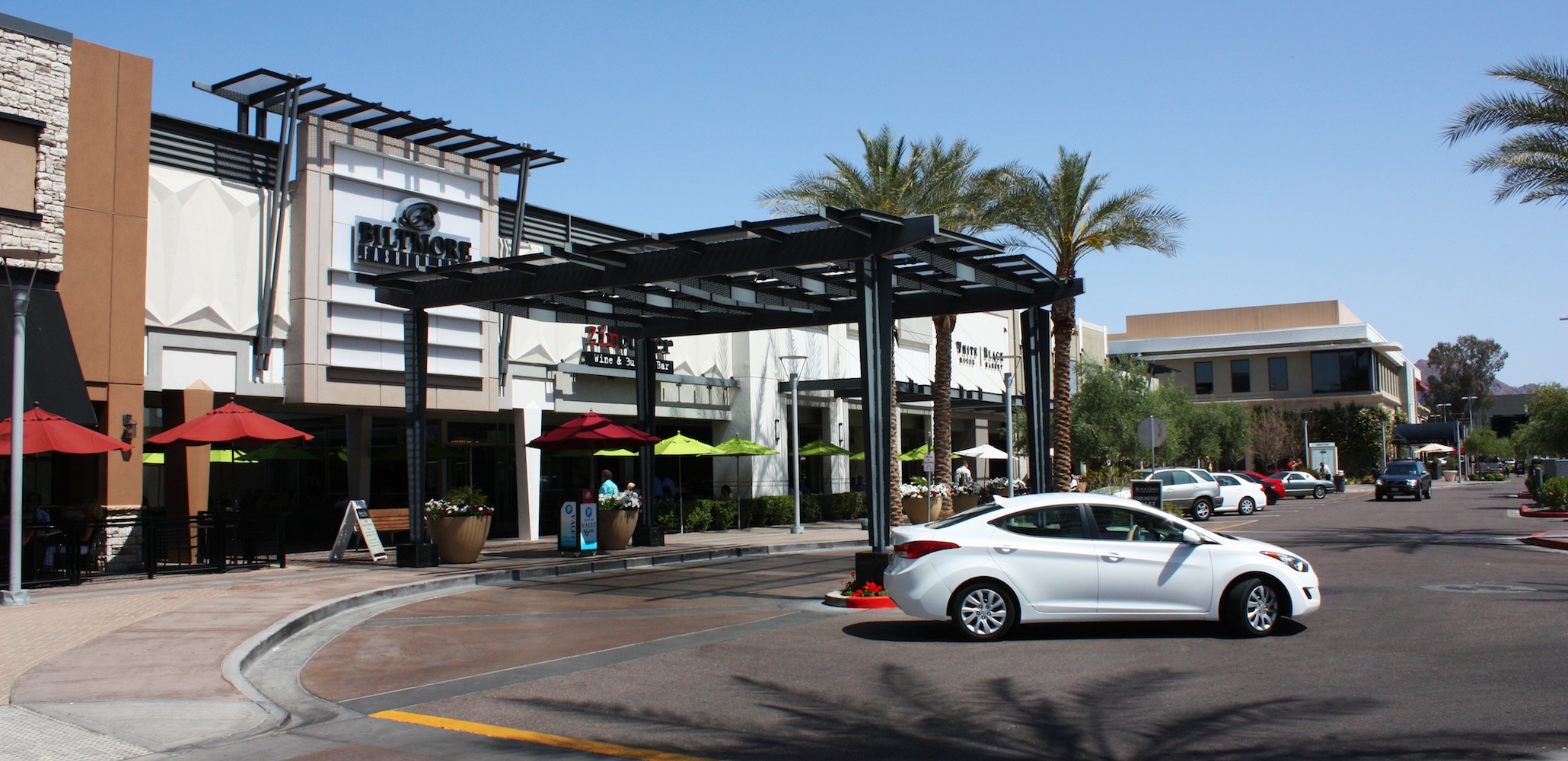
In the decades since, Kitchell’s work in the Biltmore District extended to nearby Biltmore Fashion Park, where renovations revitalized the shopping center with new façades, landscaping, and pedestrian-friendly spaces—all while keeping it open and safe for daily visitors.

Today, the Arizona Biltmore stands as a testament to Wright’s vision and Kitchell’s enduring role in expanding a Phoenix treasure.

Gabi Robinson: Turning Pressure Into Progress

Gabi Robinson, Design Manager, Kitchell Contractors

Nine years into her career, Gabi Robinson is proving what the next generation of leadership at Kitchell looks like: grit, passion, and a drive to keep raising the bar. As Design Manager, she bridges design and construction to shape projects before they even break ground. She joined Kitchell eager to test her abilities—and quickly found herself pushed to grow in ways she hadn’t expected. What’s kept her on the team, she says, is the caliber of people: “I quickly realized how much I still had to learn, but I was fortunate to work alongside amazing teams. The people at Kitchell have made the experience both rewarding and inspiring.”

Stepping Up to the Challenge

At Valleywise Health, Gabi experienced firsthand what the Kitchell spirit looks like under pressure. As the team approached the original turnover date, deadlines loomed and challenges mounted. “It felt like we were standing together at the base of a massive wall and we had to rely on each other to get over it,” she recalls. “We showed up early, stayed late, and did whatever it took to hit our deadlines and overcome the unexpected.”

Leading by Example

In her current role, Gabi is focused on improving constructability reviews and reducing preconstruction risk—efforts aimed at easing stress on project teams and delivering smoother outcomes for clients. She describes her approach as pushing beyond comfort zones to drive progress. “Growth doesn’t happen without a little discomfort. Real change happens outside our comfort zones—and every time I’ve pushed through those moments, I’ve grown.”

Looking Ahead

Gabi believes Kitchell’s future depends on staying adaptable while remaining true to its values. She hopes her impact will be measured in stronger teams, returning clients, and projects that deliver with confidence. To her, that’s the essence of Forging the Future of the Built World: turning challenges into opportunities to strengthen how Kitchell delivers.

Redefining Luxury in the 1960s

When Phoenix Country Club set out to modernize in the early 1960s, Kitchell defined its future. Founded in 1899, the club had long been a centerpiece of Phoenix’s social scene, and its next chapter called for a clubhouse that reflected both tradition and progress.

In 1961, Kitchell built a contemporary clubhouse designed by Edward L. Varney & Associates. Spanning 68,000 square feet, it elevated the member experience with expanded dining, upgraded locker rooms, 35 guest suites, and new recreational amenities including a pool and additional tennis courts.

The original clubhouse soon gave way to an open terrace, enhancing the sense of space and connection. More than six decades later, the clubhouse Kitchell built in 1961 continues to serve Phoenix Country Club—a defining landmark of design and community.